ADAS Calibration After a Windshield Replacement: Why Central Florida Drivers Can't Skip It
Published May 16, 2026 · Updated May 28, 2026 · 7 min read
The single biggest change in auto glass over the last decade has nothing to do with the glass. It's the camera bolted to the back of it. Advanced Driver Assistance Systems (ADAS) — lane keep, automatic emergency braking, adaptive cruise, traffic sign recognition — all rely on a forward-facing camera that sits behind your windshield. When the windshield comes off, the camera moves. When the camera moves, the system has to be re-taught what "straight ahead" means.
What ADAS calibration actually is
Calibration is the process of telling your car's computer the exact angle and position the camera is now sitting at, so its field of view matches reality. There are two methods, and most cars need one or both:
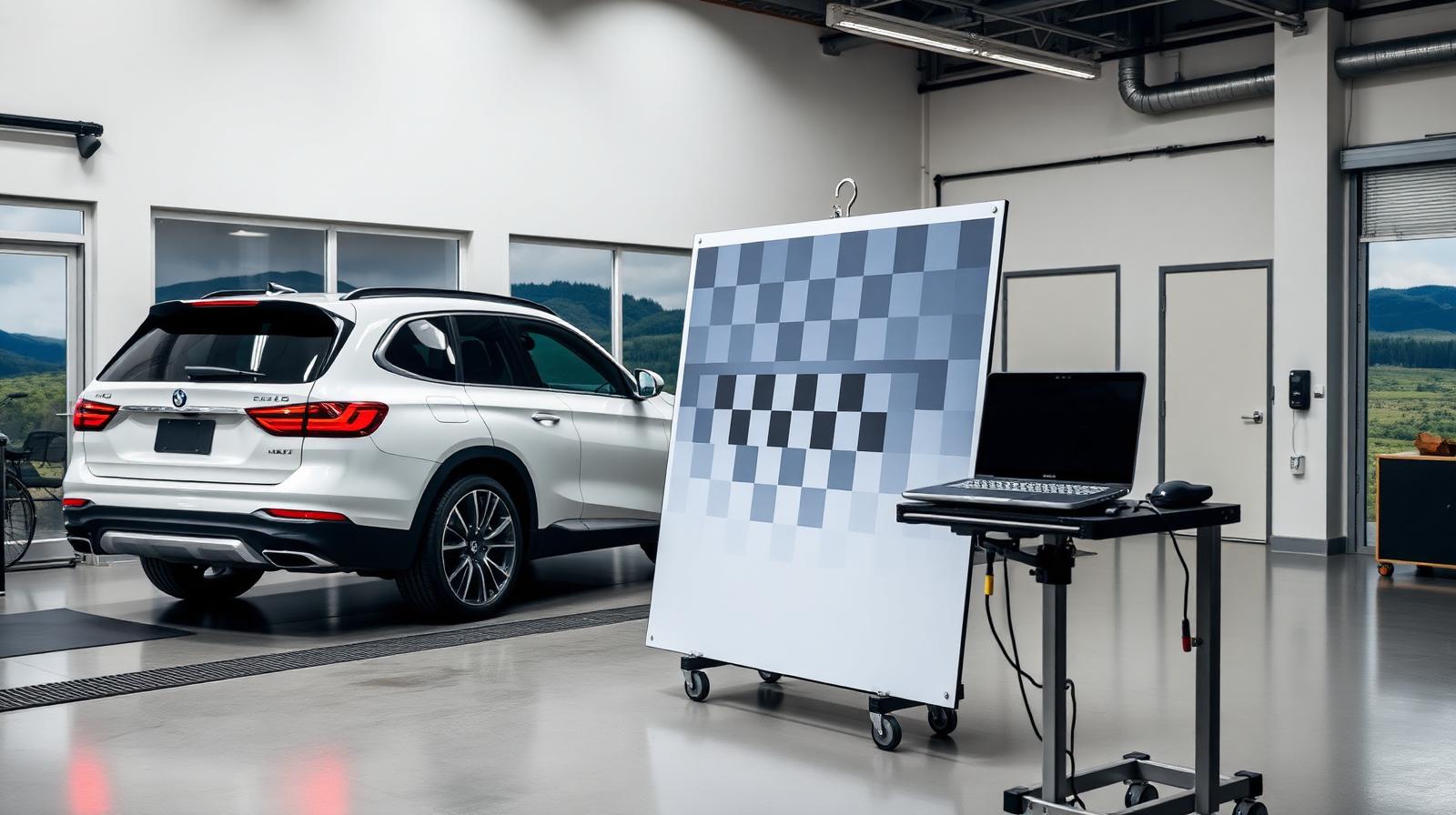
- Static calibration. The car sits in a controlled-light bay with calibration targets placed at precise distances and angles measured to the millimeter. The technician runs a diagnostic procedure via the OEM scan tool that tells the camera "this is dead center." Required for most newer Toyotas, Hondas, Subarus, and Lexus models.
- Dynamic calibration. The car is driven at a specified speed (usually 35–45 mph) on a road with clear lane markings for a set distance. The camera observes its own input against the car's other sensors and self-calibrates. Common on Ford, Chrysler, and some GM vehicles.
What happens if you skip it
The honest answer is: usually, nothing visible. The dashboard may not throw a code. Lane-keep will still pull on the wheel. Auto-braking will still trigger. The problem is that those systems are now aimed three to seven degrees off from where they should be.
The Insurance Institute for Highway Safety has published studies showing miscalibrated systems brake later, drift across lane lines, and in worst cases react to the wrong object entirely. NHTSA and every major automaker's service manual require recalibration after windshield replacement — full stop.
Why this matters extra in Central Florida
Three local conditions amplify the cost of skipping calibration:
- Afternoon downpours. Lane lines on I-4 disappear in a sudden storm. A correctly calibrated lane-keep system reads the painted edge accurately. A miscalibrated one starts pulling toward the shoulder.
- Construction-zone narrowing. 408 and I-4 Ultimate work has shifted lanes by feet at a time over the last few years. Adaptive cruise needs to read those temporary lines correctly.
- Wildlife and pedestrians at dusk. Auto emergency braking is calibrated to detect specific object signatures. Off by even a few degrees, and a deer crossing 441 at dusk is detected late.
How we do it
We're I-CAR trained and use OEM-licensed scan tools (Autel, Bosch, and the manufacturer's own software for select brands). For static calibrations, our shop has a dedicated bay with controlled lighting and target frames stored at the exact spec for every vehicle we service. For dynamic calibrations, we have a pre-mapped route along the 417 with consistent, well-marked lanes — a meaningfully better option than the random-route guess some shops use.
You get a printed calibration report at the end. Keep it with your vehicle records — it matters for resale and for any future insurance claim.
Cost, time, and bundling
Calibration adds 45–90 minutes to a windshield replacement and typically $175–$350 to the bill, depending on whether the vehicle needs static, dynamic, or both. We quote it bundled with the replacement — never as an "extra" once you're at the door. If your vehicle is ADAS-equipped, the line item will be on your initial quote, period.
Do non-windshield jobs need calibration?
Sometimes. Replacing a side or rear window doesn't disturb the forward camera, so no. But blind-spot monitor radar sensors in rear bumpers can need recalibration if a bumper is replaced, and 360-camera systems sometimes need recalibration after side glass on certain SUVs. We'll check your vehicle's service requirements before quoting.
Related reading
- Windshield replacement in Orlando: full guide
- Does insurance cover ADAS calibration in Florida?
- Mobile service vs. shop visit
References & further reading
- NHTSA — Driver Assistance Technologies — Federal guidance on ADAS.
- Insurance Institute for Highway Safety (IIHS) — Independent research on ADAS effectiveness and calibration.
- I-CAR — Inter-Industry Conference on Auto Collision Repair — Industry training and certification standards.
- Florida Trend — Automotive sector reporting — Florida automotive industry coverage.
Frequently asked questions
- Is ADAS calibration really required after a windshield replacement?
- Yes, for any vehicle with a forward-facing camera behind the windshield — which is most cars built since 2018. The OEM service manual and NHTSA both require it. Skipping it means lane-keep, auto-braking, and adaptive cruise are aimed off from where they should be.
- Will I see a dashboard light if calibration is off?
- Usually not. That's the danger — the systems still function, they're just inaccurate. The miscalibration only shows up when you need the system most, like a sudden brake event or a hard rain on I-4.
- How long does ADAS calibration take?
- 45 to 90 minutes, depending on whether the vehicle needs static (in-shop with target boards), dynamic (a road test on a mapped route), or both. We do it on the same visit as the windshield replacement.
- How much does ADAS calibration cost in Orlando?
- Typically $175 to $350 added to the replacement, depending on the vehicle and calibration type. It's quoted up front with the windshield, never as a surprise add-on.
- Can mobile techs do ADAS calibration in my driveway?
- Dynamic calibration, yes — we do the road test from your location. Static calibration usually has to happen in our shop because it requires controlled lighting and precise target placement.